
The Hamptons in version 1.0
Plan luxury retail, mansion ownership and private-driver travel in the seventh district.
Decision first
Enter the Hamptons after core cash flow is strong enough to support luxury property and lower-density travel.
The Hamptons is the seventh New York neighborhood and is live in Big Ambitions 1.0. It is intentionally unlike the dense commercial districts: the official release describes a mostly residential area built around mansions, a gated enclave, a private dock, and a small strip of luxury retail.
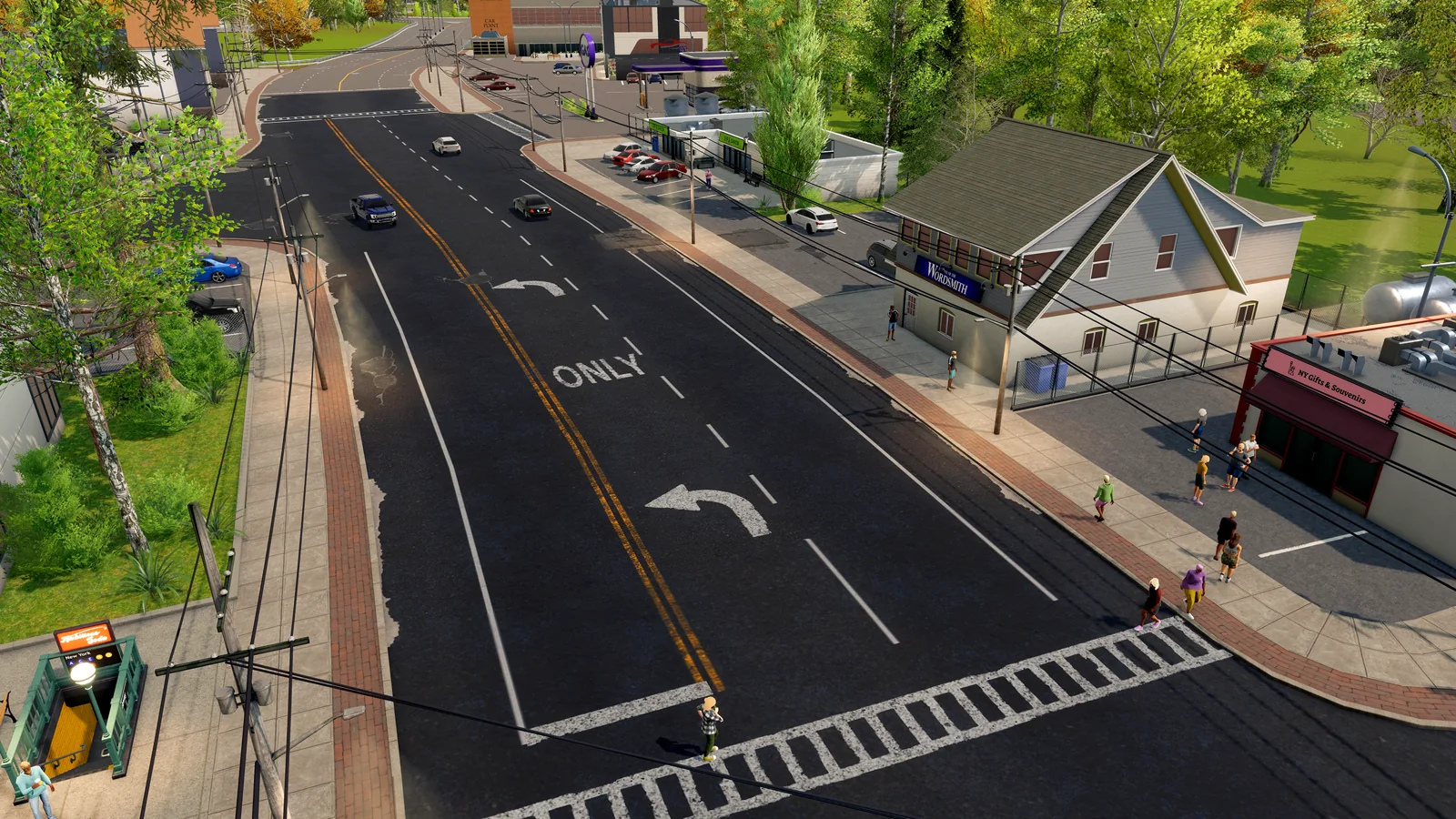
Confirm the lower-right build label is 3674 before comparing property availability.
Complete operating playbook
- ARTICLE LENGTH
- 6,288 words
- DEEP-DIVE SECTIONS
- 14
- RESEARCH LEDGER
- 12
What the Hamptons is in build 3674
The Hamptons is the seventh New York neighborhood and is live in Big Ambitions 1.0. It is intentionally unlike the dense commercial districts: the official release describes a mostly residential area built around mansions, a gated enclave, a private dock, and a small strip of luxury retail.
That description should control expectations. The district is not a fresh downtown grid packed with interchangeable storefronts, warehouses, wholesalers, and offices. Its useful commercial stock is scarce, and much of its map area serves lifestyle, residence, and late-game status goals. A player who arrives expecting every street to support a new retail chain can spend a great deal of driving time without finding a suitable unit. Open VoogleMaps, select the Hamptons, and inspect each candidate rather than inferring business availability from the apparent size of the neighborhood.
Build 3674 is the current public build reviewed here. The September 1 patch included fixes for saves in which Hamptons retail buildings could be missing, for parking entrances at Hamptons stores, and for the map search and underground-parking load path. Those fixes matter when comparing screenshots or reports made during the launch weekend. A layout observed on an earlier 1.0 build may not reproduce exactly, so confirm the build number and load the save once on 3674 before diagnosing a permanently absent property.
The private dock is a live landmark, but boats and ferry systems shown on the post-release roadmap are not established 1.0 features. Likewise, a mansion is a real purchasable late-game objective, while any promised use for waterfront transport belongs to a future release until an official shipped changelog says otherwise. This distinction prevents a common planning mistake: reserving money, parking, or a business concept for mechanics that look plausible on the map but do not yet operate in the reviewed build.
Action checklist
- Confirm the lower-right build label is 3674 before comparing property availability.
- Use VoogleMaps filters and property panels instead of treating every visible building as rentable.
- Separate live mansion, retail-strip, parking, and chauffeur features from roadmap boats or ferries.
- Recheck a launch-week save on the current build if Hamptons retail appears missing.
| Map element | Build 3674 status | Planning consequence |
|---|---|---|
| Residential estates and mansions | Live | Treat as capital-intensive residence or real-estate decisions, not automatic business sites. |
| Small luxury retail strip | Live | Scarcity raises the value of inspecting traffic, capacity, rent, and permitted business type before signing. |
| Private dock | Live landmark | Do not assign it a transport or revenue function without an in-game action confirming one. |
| Boats and ferry | Roadmap, not verified live | Exclude them from current cash-flow and logistics plans. |
The real capital gate
Official 1.0 material says Hamptons mansions cost a few million dollars, but it does not publish a universal safe entry budget. The meaningful gate is therefore not a single bank balance; it is the ability to buy or lease the objective without starving the operating portfolio that produced the money.
Divide available capital into separate jobs before committing. Keep operating liquidity for payroll, rent, deliveries, production inputs, marketing, loan minimums, and the tax projection shown in Econoview. Keep an emergency reserve for a failed import, staffing loss, or temporary demand slump. Only the remainder is expansion or lifestyle capital. If the mansion purchase would require borrowing against payroll, liquidating working inventory, or ignoring projected taxes, the player has reached the map geographically but not financially.
A useful gate is runway rather than wealth display. Add the portfolio's expected daily fixed outflow, conservative replenishment cost, required debt payment, and tax reserve contribution. Multiply that total by a stress period long enough to survive several weak days and one disrupted delivery cycle. The precise stress period is a player policy, not a game constant. The remaining cash after the Hamptons commitment should exceed that result. A more volatile factory-and-retail network deserves a longer runway than a mature set of stable offices and occupied rentals.
The 1.0 banking changes make casual overextension more expensive to repair. Loans require stronger income, carry higher interest, have minimum daily payments, and can be repaid partially. Investments now allow partial withdrawals and daily auto-investing. Those conveniences do not turn invested money into free liquidity: withdrawing during a downturn can lock in a bad result, while a new loan adds a daily claim on cash. Pause auto-investing before a major acquisition and model the new minimum payment before accepting credit.
Action checklist
- Reserve projected taxes and any late-payment exposure before calculating spendable cash.
- Model payroll, rent, deliveries, inputs, marketing, and minimum loan payments as daily obligations.
- Pause automatic investing while accumulating a near-term purchase fund.
- Reject the purchase if the surviving runway depends on optimistic sales or perfect deliveries.
| Capital bucket | Question | Gate |
|---|---|---|
| Operations | Can every open business run through a weak week? | Fund before Hamptons spending. |
| Taxes and debt | Are projections and minimum payments covered? | Ring-fence the amount. |
| Emergency reserve | Can one logistics or staffing failure be absorbed? | Do not count it as purchase cash. |
| Expansion or lifestyle | What remains after the first three buckets? | This is the usable Hamptons budget. |
Scout the district before signing anything
A Hamptons scouting lap should produce a short property dossier, not just a favorite facade. Record address, building class and maximum customer capacity, rent or purchase terms, opening access, nearby parking, traffic index, and the demand and competition relevant to the intended business.
Start in VoogleMaps and MarketInsider with the Hamptons selected. Build 3672 corrected MarketInsider so it opens on the current neighborhood, but still verify the district label before reading demand. A high citywide opportunity does not prove that the Hamptons has enough local demand or the right building. Compare several days because demand, rivals, and customer flow can change. The fan-maintained Bigger Ambitions building database is useful for forming a candidate list, but it has no authoritative 3674 data stamp; confirm every decisive field in the current save.
Visit candidates during the hours when the proposed business would actually trade. Traffic index is a location input, not a count of guaranteed buyers. An older developer explanation described promotion as traffic plus up to fifty percentage points from marketing, followed by satisfaction and demand effects. That is useful as a diagnostic model, but it was posted in 2024 and was not republished as a 1.0 formula. Use it to ask better questions, then rely on current BizMan results rather than presenting the arithmetic as a guaranteed build-3674 equation.
Inspect practical access. Look for legal curb spaces, store-lot entrances, walking distance from subway exits, turning difficulty, and delivery access. Parking convenience affects the player's time even when it is not a direct customer statistic. A location that forces a truck to circle several blocks can make daily replenishment fragile. Conversely, an expensive car does not create demand simply because it is parked outside. Keep operator convenience, customer traffic, and prestige as separate columns in the property dossier.
Action checklist
- Record the in-game capacity and traffic shown for each shortlisted property.
- Confirm MarketInsider is displaying the Hamptons before noting demand or rivals.
- Drive the delivery approach and identify legal parking before accepting a lease.
- Treat fan databases as discovery aids and verify decisive values in VoogleMaps.
| Field | Why it matters | Verification |
|---|---|---|
| Building capacity | Creates a hard ceiling that equipment or marketing cannot exceed. | Current property panel and BizMan. |
| Traffic index | Influences promotion and customer opportunity. | Current VoogleMaps listing. |
| Demand and competition | Determines whether the concept has room locally. | MarketInsider with neighborhood checked. |
| Parking and delivery path | Determines operator friction and restocking reliability. | Physical visit at working hours. |
Choose a Hamptons business for evidence, not prestige
The official description calls the retail strip luxurious, but that is atmosphere, not a promise that every expensive product will earn more there. Business choice should match current local demand, permitted building type, station capacity, attainable service quality, and the portfolio's supply chain.
Begin with the MarketInsider demand bar and rival list, then inspect comparable AI stores. AI businesses can provide a rough sense of opening hours and prices, according to a developer forum reply, but they are not perfect templates. Their brand, staffing, inventory, and satisfaction may differ. Use them to create a first test, not to copy an entire plan. A luxury-looking district can still have weak demand for a proposed line, and a less glamorous service may fit the available unit and competition better.
Prefer concepts that reuse proven portfolio capabilities. If existing logistics already carry a compatible product family, a Hamptons branch may add modest route complexity. If the concept requires a new importer, new warehouse zones, new factory recipes, specialist recruitment, and unfamiliar opening hours all at once, location risk becomes entangled with operational risk. Late-game money can hide this for weeks, but hidden losses remain losses. Pilot the smallest compliant format that can generate clean observations before fitting the most elaborate interior.
Do not use unsupported profitability tables as a substitute for a local test. Patch 0.11 deliberately changed the profitability of gyms and several office businesses, and 1.0 changed economy systems again. Guides made for earlier builds may describe product margins, traffic patterns, rents, tax effects, or staffing costs that no longer reproduce. A robust recommendation names the build, records assumptions, and reports observed throughput and costs; a claim that one business is always best should be treated as opinion unless reproducible 3674 evidence accompanies it.
Action checklist
- Shortlist concepts only after checking Hamptons demand and active competition.
- Prefer a concept that reuses current recruiting, logistics, or production infrastructure.
- Copy AI opening hours or prices only as an initial experiment.
- Reject rankings that omit build number, difficulty, building, capacity, and test conditions.
| Candidate signal | Positive reading | Warning reading |
|---|---|---|
| Demand | Sustained room after observing several days | One attractive snapshot treated as permanent. |
| Competition | Rivals leave a differentiated or underserved segment | A crowded segment is entered solely for prestige. |
| Supply fit | Existing warehouse or factory can absorb the branch | A whole new chain is required for an untested shop. |
| Building fit | Capacity and stations support the intended scale | High rent is mistaken for high earning power. |
Design to the smallest capacity constraint
Customer capacity is a chain of limits. An older developer explanation states that each station category has its own service capacity, the store is restricted by its lowest required station category, and the result is still capped by the building maximum. This remains a valuable diagnostic model, although the cited reply predates 1.0.
List every required customer-facing station shown by the business information and help panels. The exact set depends on the chosen business: examples can include checkout, service, seating, fitting, treatment, or entertainment positions. Add the capacity of each required category separately. Ten checkout positions cannot compensate for too little seating if both are required to complete a visit. Decorative density cannot compensate for either. Stop adding a station category once another required category or the building itself has become the lower ceiling.
Then compare capacity with observed hourly arrivals. BizMan's Insights view shows yesterday's customer graph and is more useful than a daily total for diagnosing a peak. If the busiest hour repeatedly reaches the same ceiling while satisfaction and inventory are healthy, the site is constrained. If the graph remains well below capacity, more stations are unlikely to solve the problem; investigate promotion, demand, opening hours, price, satisfaction, or interruptions. Marketing is especially wasteful when the venue is already full at the relevant time.
Space planning should preserve access as well as theoretical capacity. A floor packed with stations can create awkward staff routes, blocked interactions, and slow manual restocking. Build a clear entrance path, place frequently replenished items near an efficient stock route, and keep staff needs reachable. Test at live peak speed before buying duplicate premium furnishings. The goal is not to maximize the count of objects; it is to maintain the necessary station balance and reliable flow within the building's hard cap.
Action checklist
- List every required station category and total each category independently.
- Identify the lowest required station total and compare it with the building cap.
- Read the hourly customer graph before adding capacity or marketing.
- Walk staff, customer, and restocking paths during a live peak.
| Observed pattern | Likely constraint | Next test |
|---|---|---|
| Flat peak at stated capacity | Building or required station ceiling | Identify the lowest station category before expanding. |
| Arrivals below capacity, good satisfaction | Demand, traffic, promotion, or hours | Change one acquisition variable and compare like days. |
| Arrivals enter but sales disappoint | Product fit, inventory, price, or completion path | Observe unmet needs and stockouts. |
| Only one hour is overloaded | Schedule mismatch | Move staff coverage toward that hour before enlarging the site. |
Staffing a remote premium branch
A Hamptons branch should be staffed from workload evidence and employee requirements, not from the assumption that a premium address needs maximum headcount. Recruiting too early raises fixed cost; recruiting too late produces queues, closures, and avoidable satisfaction loss.
For each role, map the opening schedule, station count, break coverage, and individual work-hour preferences. Confirm skill, training level, full-time or part-time preference, and any workplace needs shown in BizMan. Build the core schedule around the actual peak rather than distributing labor evenly across every open hour. A quiet morning and crowded evening call for staggered shifts. If the business closes because a single qualified worker is absent, create a cross-trained reserve or a documented relief assignment.
Diagnose labor with the hourly graph and with direct observation. A line growing while an eligible station stands unused points to staffing or schedule coverage. Every station occupied with a stable line points to physical capacity. Empty stations with low arrivals point elsewhere. Do not respond to all three patterns by hiring. Compare the same weekday because daily variation is normal, and record whether a promotion, price change, rival opening, or stock problem occurred during the test.
The district's distance from a central headquarters or warehouse matters mainly to the player and logistics plan, not as an invented employee commute statistic. Centralize recruitment and training where possible, then assign trained workers. Keep the first week's roster slightly flexible so opening hours can be corrected after real traffic appears. Once the pattern stabilizes, remove redundant overlap without leaving a single point of failure. Premium decor cannot rescue a shift that lacks the required employee type.
Action checklist
- Match employee type and training to each required workstation.
- Overlay staffing shifts on yesterday's hourly customer graph.
- Keep one practical relief path for every role that can close the venue.
- Change schedules before adding permanent headcount when the problem is time-specific.
| Symptom | Labor interpretation | Action |
|---|---|---|
| Unused station during a queue | Insufficient eligible coverage | Add or move a trained worker into that interval. |
| All stations busy and queue persists | Capacity may be the bottleneck | Add the limiting station only if the building cap allows. |
| Employees idle and arrivals low | Not primarily a staffing shortage | Check demand, promotion, hours, and price. |
| Unexpected closure | Critical role or schedule gap | Create backup coverage and verify each opening block. |
Inventory, delivery, and route design
A distant branch becomes expensive when it forces emergency driving. The best Hamptons logistics plan sizes stock to peak demand, uses a repeatable delivery route, and preserves enough storage to survive normal variation without filling expensive retail floor area with random surplus.
Forecast from actual units sold by product and by day, then add a defined safety buffer. Do not use revenue as a proxy for unit consumption: expensive items can produce high revenue with few sales, while concessions or consumables turn quickly. Record the maximum interval between dependable deliveries and size local storage to cover that interval plus the buffer. Recalculate after promotions, price changes, or a meaningful shift in opening hours.
Official 0.9 notes changed importer and wholesaler deliveries to a weekly Monday cycle, with location ordering limits and quantities expressed in units rather than boxes. Those rules were part of the public game before 1.0, but a current player should still read the order interface rather than rely on remembered limits from an older guide. Smart delivery and warehouse routing reduce manual work only when destination shelves, product zones, order quantities, vehicles, and driver schedules are configured coherently.
Test the physical approach with the vehicle used for the route. Build 3672 repaired Hamptons store parking entrances, so old reports of impossible access may describe a launch bug. Still, a technically usable entrance can be inconvenient for a large truck. Time the complete stop, unload, and return rather than comparing map distance alone. If the branch consumes little stock, a smaller vehicle or less frequent route may be more efficient; if it consumes heavily, dedicate capacity rather than relying on last-minute player trips.
Action checklist
- Forecast units by product and use the longest delivery interval, not average revenue.
- Verify current order limits and delivery day in the live interface.
- Test the real store entrance with the intended delivery vehicle.
- Set a reorder trigger that leaves time to recover from one missed delivery.
| Constraint | Measurement | Control |
|---|---|---|
| Local shelf and storage | Units consumed before next delivery | Safety stock and sensible product mix. |
| Warehouse availability | Units allocated across all branches | Reserve inventory and avoid branch cannibalization. |
| Vehicle and driver | Route duration and carrying capacity | Schedule slack and route grouping. |
| Supplier cycle | Order cutoff, limit, and arrival day | Order ahead and inspect the current UI. |
Traffic, marketing, parking, and what each one means
Traffic, marketing, and parking are often bundled into a vague idea of a good location. They solve different problems. Traffic and marketing influence customer acquisition; satisfaction and demand influence the outcome; parking mainly changes the player's access and operating convenience unless the game explicitly reports another effect.
The developer's 2024 example said a traffic index of sixty plus eighty percent marketing produced one hundred promotion because marketing contributed forty of a possible fifty points. A traffic index of twenty plus full marketing produced seventy. This is strong developer evidence for the older public model, but it is not a build-3674 formula sheet. Use the relationship qualitatively: marketing can supplement a weaker location, but it may not erase every disadvantage, and it cannot create station capacity or make customers purchase.
Run marketing only against a defined acquisition problem. If hourly attendance is below capacity while stock, price, satisfaction, opening hours, and demand look healthy, increase one campaign and compare equivalent days. If the busiest hours already touch capacity, more promotion can merely pay to attract customers who cannot be served. If people arrive but do not buy, look at product availability, price, service completion, and satisfaction. The campaign metric is not a revenue guarantee.
Treat parking observations precisely. Record whether there is a store lot, curb space, garage, or nearby subway, and whether the player's normal vehicle fits. Do not claim that a parking bay adds a fixed number of customers without a current reproducible test. Build 3672 fixed entrances and traffic stop-line behavior, while 3674 fixed an employee-related bug that could disrupt deliveries. Operational failures around launch should be reproduced on the current build before being converted into permanent map advice.
Action checklist
- Name the specific acquisition problem before buying more marketing.
- Compare attendance with the lowest capacity ceiling at the same hour.
- Keep parking convenience separate from customer-traffic claims.
- Reproduce pathing or delivery failures on 3674 before redesigning the operation.
| Lever | What it can address | What it cannot prove |
|---|---|---|
| Traffic index | Baseline location exposure | Guaranteed buyers or profit. |
| Marketing | Additional promotion and arrivals | Purchases, satisfaction, or unlimited throughput. |
| Parking | Player access and route convenience | A fixed customer bonus without testing. |
| Capacity | Maximum customers that can be served | Sufficient demand to fill the venue. |
Use the private driver without confusing convenience with return
Version 1.0 adds Onyx Luxury Chauffeurs. The official workflow is to choose a vehicle, including the new limousine if desired, establish a contract, leave the vehicle with the service, and summon the driver when transport is needed.
The chauffeur is a time-management and role-playing tool. It can reduce the friction of moving the player between a mansion, headquarters, shops, and other appointments, especially when manual driving has become repetitive. It does not by itself improve a store's demand, capacity, staffing, or margin. Evaluate it against player time saved and enjoyment, not against an invented passive-income figure.
Before handing over a vehicle, decide whether that vehicle is part of any active delivery or operational routine. A prestigious car used only for personal travel is an obvious candidate; a van that covers a fragile restocking route is not. Keep a separate practical vehicle available where manual cargo work may still occur. Test summon locations near the mansion, retail strip, and headquarters so the service becomes a repeatable routine rather than a novelty that strands the player away from needed equipment.
Include the contract in the lifestyle budget. If the wider portfolio has weak cash control, the driver can disguise inefficiency by making a sprawling route feel painless while payroll, interest, and tax obligations accumulate. Use it after core operations are automated and measurable. If convenience produces time for higher-value management, expansion analysis, or minigames, that can be worthwhile, but the benefit belongs to the player's schedule and should not be presented as a guaranteed financial return.
Action checklist
- Choose a vehicle that is not required by a delivery route.
- Complete the Onyx contract and vehicle handoff shown by the in-game workflow.
- Test summons at the places used most often.
- Book the cost as lifestyle or management convenience, not store marketing.
| Use case | Good fit | Poor fit |
|---|---|---|
| Mansion to headquarters travel | Frequent personal trips with stable businesses | Portfolio still needs constant manual deliveries. |
| Vehicle choice | Dedicated personal car or limousine | Only cargo vehicle assigned to restocking. |
| Financial interpretation | Explicit convenience expense | Claimed source of customer demand. |
| Operational value | Frees player attention for management | Used to avoid fixing route design. |
Worked example: qualifying for a mansion and one branch
This example is a planning method, not a statement of official prices or earnings. Replace every illustrative figure with values from the current save, difficulty, building, and portfolio. The purpose is to prevent a visible cash balance from being mistaken for affordable capital.
Suppose a player records 180,000 per day of fixed and expected variable outflow across the portfolio, including payroll, rents, replenishment, production inputs, marketing, and minimum debt service. The player chooses a ten-day stress runway, creating a 1,800,000 operating reserve. The current tax projection calls for 900,000, and the player holds a 500,000 emergency logistics reserve. If liquid cash is 8,000,000, only 4,800,000 is initially unassigned. These numbers are hypothetical and deliberately rounded.
The player then reads the actual mansion price and purchase costs in game and prepares a separate branch budget covering deposit or acquisition, license, fit-out, first inventory, recruitment, training, marketing test, and at least one revision. If those commitments total 4,200,000, only 600,000 remains above the protected buckets. That margin may be too thin because the branch estimate is uncertain. The disciplined response is to delay, reduce branch scope, or buy the home without opening the branch immediately; it is not to silently consume the tax reserve.
After purchase, the branch opens with one controlled campaign and conservative hours copied only as a starting point from comparable stores. For seven comparable trading days, the player records hourly arrivals, customers served, lost sales or stockouts, satisfaction, staffing coverage, product units, and contribution after direct costs. If evening demand reaches the station ceiling while mornings are empty, staff and opening hours move toward evening. If traffic stays weak below capacity, the player tests promotion or concept fit before buying more furniture.
Action checklist
- Replace all illustrative values with current-save observations.
- Protect operating, tax, debt, and emergency buckets before pricing the objective.
- Budget acquisition and branch launch as separate decisions.
- Require a measured test window before authorizing a larger fit-out.
| Illustrative item | Amount | Decision treatment |
|---|---|---|
| Liquid cash | 8,000,000 | Starting point only. |
| Ten-day operating runway | 1,800,000 | Protected. |
| Tax plus emergency reserves | 1,400,000 | Protected. |
| Initially unassigned capital | 4,800,000 | Maximum before property and branch uncertainty. |
Peak-demand diagnosis after opening
Late-game scale makes daily totals misleading. Diagnose the Hamptons branch hour by hour and change one constrained variable at a time. The central question is whether the business lacks arrivals, cannot serve arrivals, or serves them without converting enough value.
First classify the symptom. Low attendance with spare capacity suggests weak demand, promotion, traffic, opening hours, or a concept mismatch. A repeated flat ceiling suggests building or station capacity. Queues with unused compatible stations suggest staff scheduling. Sales that stop while customers still appear can indicate empty shelves, missing service steps, inappropriate pricing, or poor satisfaction. A closed interval during advertised hours points to coverage or a required role. Each class has a different remedy.
Use matched comparisons. Tuesday after a major price change is not a clean comparison with Saturday under a new campaign. Record day, opening hours, prices, marketing, demand reading, staff roster, inventory at open and close, satisfaction, and any rival event. Hold most variables constant for several observations. The goal is not statistical perfection; it is to avoid changing price, campaign, staffing, decor, and inventory simultaneously and then attributing improvement to the most expensive change.
Escalate in the cheapest reversible order. Correct accidental closure and stockouts first. Move existing staff before hiring. Adjust hours before adding all-day coverage. Test a targeted campaign before signing a permanent high-cost commitment. Add the actual limiting station before enlarging every category. Consider relocation or a different concept only after the site has had a fair, reproducible test. A prestige location deserves the same operational discipline as any other district.
Action checklist
- Classify the problem as acquisition, service capacity, conversion, or interruption.
- Compare equivalent weekdays with most variables held constant.
- Fix closures and stockouts before tuning marketing or decor.
- Escalate from reversible schedule changes to irreversible property decisions.
| Metric pair | Reading | Most useful next move |
|---|---|---|
| Low arrivals, spare capacity | Acquisition or demand problem | Check district, hours, price context, satisfaction, then test promotion. |
| High arrivals, hard plateau | Throughput ceiling | Find lowest station category or building cap. |
| Queues, idle stations | Roster mismatch | Move qualified labor into the peak. |
| Arrivals, weak completed sales | Conversion or supply problem | Inspect inventory, service path, pricing, and needs. |
Mansions and Hamptons real estate as portfolio assets
A residence and an income-producing rental are different decisions even when both sit in the same premium district. Track personal utility, purchase appreciation assumptions, rental occupancy, operating cost, and opportunity cost separately so lifestyle spending does not borrow the language of business return.
For an owned residence, the measurable return may simply be access, storage, convenience, achievement progress, or role-playing value. Those are valid goals. Do not manufacture a yield by counting money that the house does not pay. Compare the purchase with other uses of expansion capital and decide explicitly that the personal objective ranks higher. This makes later portfolio review honest: the mansion can succeed as a lifestyle acquisition even if it would not pass an income-asset test.
For a rental property, evaluate occupancy and net rent after relevant costs. In an April 2026 developer reply, occupancy was described as increasing when rent decreases, with neighborhood factors also involved, a seven-day delay before a new price applies, and additional time before occupancy responds. That is useful current-era developer guidance, but it predates 1.0 and does not provide an exact Hamptons formula. Change rent deliberately, wait through the stated lag, and compare a sufficiently long period rather than repricing every day.
Calculate capacity at the portfolio level. Capital locked in one premium property cannot fund inventory, factory expansion, venue licenses, or debt reduction. Management attention also has a cost: multiple rentals with unstable occupancy can create review work even if no physical delivery is required. Set an asset-allocation rule, such as a maximum share of unencumbered capital in lifestyle property, based on risk tolerance. The rule is the player's policy, not a hidden game optimum.
Action checklist
- Label each property as residence, rental, business site, or mixed objective.
- Do not describe personal utility as rental yield.
- Allow at least the documented pricing lag before judging a rent change.
- Include locked capital and management attention in the portfolio constraint.
| Property objective | Primary evidence | Common category error |
|---|---|---|
| Personal mansion | Utility and affordability | Calling prestige a cash return. |
| Rental unit | Occupancy and net rent over time | Judging one day after repricing. |
| Commercial branch | Throughput and contribution after direct costs | Assuming luxury address guarantees demand. |
| Capital reserve | Liquidity and avoided risk | Treating all cash as idle money. |
Live features, patch defects, and roadmap boundaries
A current guide must distinguish three states: shipped mechanics, known build defects, and announced plans. The Hamptons combines all three because it arrived in 1.0, received launch-week fixes, and appears beside future waterfront ideas on the roadmap.
Shipped and supportable on 3674 are the neighborhood itself, purchasable mansions, the small luxury retail area, the private dock as a place, Onyx Luxury Chauffeurs, food delivery and delivery work, the revised banking, investment and tax systems, and the other 1.0 changes in official notes. Individual values such as rent, property price, demand, traffic, and rival strength should be read from the current save because they are not fixed by the announcement text.
Known launch issues include missing retail buildings in some Hamptons saves and problematic store parking entrances, both listed as fixed in the 3672 portion of the September 1 patch. Build 3674 fixed an employee quitting bug that could cause training, imports, and deliveries to fail. The same announcement says frame-rate drops and choppy gameplay were still under investigation. Therefore it is inaccurate to call 3674 universally bug-free even though it is the newest officially documented build found in this review.
Roadmap graphics describe intent, not current functionality. The December 2025 studio update discussed two free post-release content updates and a future Shanghai DLC, and the current roadmap places boats and ferry ideas after 1.0. Dates, scope, and price can change. Do not tell a player to buy a dockside property for ferry income, reserve a vehicle for a boat system, or treat Shanghai as installed content. Promote a planned feature to current fact only when a dated release note says it shipped on the public branch.
Action checklist
- Require a dated public-branch release note before calling a roadmap item live.
- Separate fixed launch defects from problems reproduced on build 3674.
- Describe current value fields as save-specific unless official notes fix them.
- Acknowledge the unresolved 3674 performance investigation when discussing stability.
| Claim | Status | Safe wording |
|---|---|---|
| Hamptons and mansions are playable | Current | Shipped in 1.0 and reviewed on build 3674. |
| Retail can be missing | Launch defect listed as fixed | Update and retest before escalating. |
| Boats and ferry operate from the dock | Roadmap only | Planned concept, not a verified 1.0 mechanic. |
| 3674 solves every launch issue | Unsupported | Several fixes shipped; performance work was still ongoing. |
Final Hamptons audit
Run this audit after the purchase decision and again after the first controlled trading period. A pass means the district serves a stated portfolio or lifestyle purpose without relying on roadmap mechanics, hidden reserve spending, or unsupported profit assumptions.
Map audit: the save is on build 3674; the selected property exists and its current panel has been recorded; permitted use, capacity, traffic, rent or price, parking approach, delivery entrance, and nearby transport have been physically checked. MarketInsider is showing the Hamptons, and the business choice responds to current demand and competition rather than the visual theme alone. Any fan database value has been confirmed in game.
Operating audit: required station categories are balanced below the building maximum; qualified staff cover every opening interval and the real peak; stock survives the delivery interval with a defined buffer; routes work with the assigned vehicle; marketing targets spare capacity rather than a full venue; and hourly Insights data is being collected. The manager can identify whether the current limit is acquisition, capacity, conversion, or interruption and has changed only one major variable per comparison.
Capital and evidence audit: projected taxes, debt minimums, payroll, replenishment, and emergency liquidity remain protected after the commitment. The mansion's personal value is not disguised as rent, and a rental's occupancy is judged after the documented pricing lag. The chauffeur is treated as convenience. Boats, ferries, Shanghai, and other future concepts remain labelled roadmap. Exact profits, optimal prices, and universal best-business claims are absent unless a reproducible 3674 test with full assumptions supports them.
Action checklist
- Pass map, access, demand, capacity, staffing, inventory, and capital checks independently.
- Keep a dated baseline screenshot or note for every changed operating variable.
- State the build and difficulty when sharing results.
- Fail the audit if success depends on an unreleased feature or borrowed reserve.
| Audit area | Pass condition | Failure response |
|---|---|---|
| Evidence | Current in-game observation agrees with dated sources | Label uncertainty and retest. |
| Capital | Protected obligations survive the commitment | Delay, reduce scope, or rebuild reserves. |
| Operations | Peak can be explained and supplied | Fix the measured bottleneck before expansion. |
| Roadmap | No future mechanic is required | Remove it from the present plan. |
Research ledger
These links establish mechanics or provide a reproducible lead. Any balance-sensitive number still has to be checked in the current save.
Questions answered
Is the Hamptons available in the current public game?
Yes. It shipped as the seventh neighborhood in version 1.0 on August 28, 2026. This guide was reviewed against the official 1.0 notes and the September 1 build 3674 patch. If a save created during the launch window has no retail buildings, update and retest because build 3672 specifically listed a fix for that condition.
Are boats and ferries usable from the private dock?
Not as a verified build-3674 feature. The dock is part of the live Hamptons environment, while boats and ferry ideas appear in post-release roadmap material. A roadmap is not a public-branch changelog, so current plans should not assign transport, revenue, or logistics value to those systems.
How much money is required before buying a mansion?
Official material says a few million dollars but does not establish one safe budget. Read the current in-game price, then protect taxes, debt minimums, payroll, rent, replenishment, production inputs, and an emergency runway. The affordable amount is what remains, not the total cash balance. Difficulty and portfolio structure make a universal threshold misleading.
Does a luxury address guarantee a profitable luxury shop?
No reliable source supports that guarantee. Check Hamptons demand and competition, current property capacity and traffic, required stations, staffing, inventory, prices, satisfaction, and hourly customers. Patch changes have altered business balance over time, so an old ranking or an unlabelled profit screenshot is not sufficient evidence.
Should marketing be maximized for a Hamptons branch?
Only if customer acquisition is the measured constraint. Developer guidance explains that marketing helps bring people to a business, not make them buy, and older capacity guidance says more marketing is wasteful when the venue is already at its limit. Compare matched days and stop increasing promotion when stations or the building cap are already saturated.
Can an unofficial building database be used for planning?
Yes, as a reference and search shortcut. Bigger Ambitions was recommended by a developer in 2024 and exposes useful property fields, but its table does not provide an authoritative build-3674 stamp for every row. Verify address, availability, permitted use, capacity, traffic, parking, and price in the current save before committing capital.
Is the private driver a business upgrade?
It is a live 1.0 convenience system. The player contracts with Onyx, leaves a chosen vehicle, and summons a driver. It can save personal travel time, but the official notes do not say that it raises shop traffic, capacity, demand, or profit. Keep it out of branch return calculations unless measuring the value of player time explicitly.
What should be checked first when a new branch disappoints?
Check accidental closure, required-role coverage, and stockouts first. Then compare hourly arrivals with the lowest station or building capacity. Low arrivals point toward demand, traffic, promotion, hours, or concept fit; a hard plateau points toward capacity; arrivals without completed sales point toward inventory, price, satisfaction, or the service path.